Shocking Turn Signal Fix For Classic Cars!
I’ve been messing around with car electronics for years, so I’ll admit this one was a little embarrassing. While finishing up the wiring on my classic Mustang, my turn signal indicator lit up solid and refused to blink. A brand-new flasher didn’t fix it either. The culprit turned out to be something no one ever told me about old-school flashers, and if you’re restoring a classic or switching to LED bulbs, you need to know it too. Here is the simple turn signal fix that finally solved it.
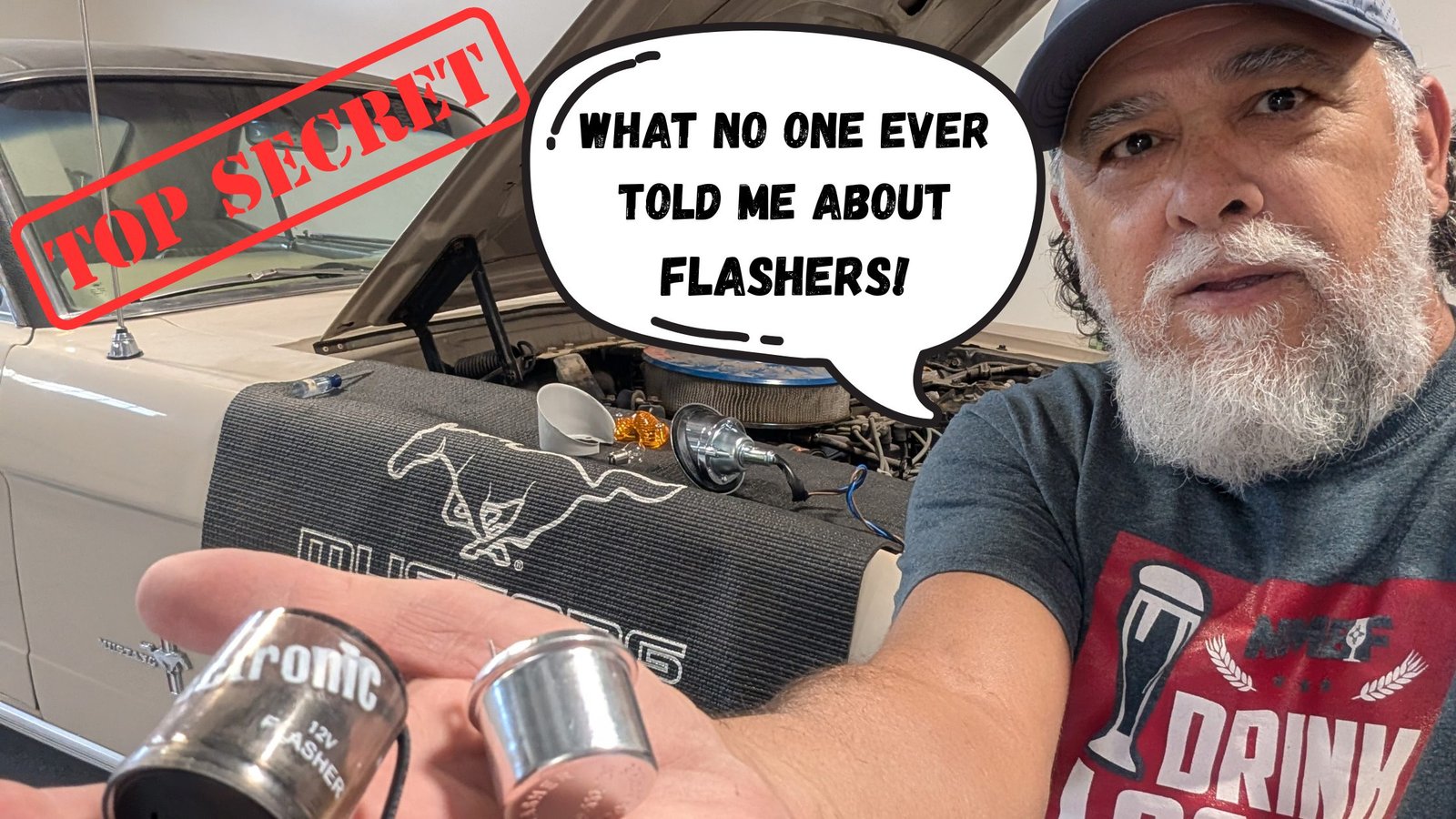
Watch the Fix in Action
In this video I walk through the problem I ran into, explain why it happens, and show the turn signal fix by swapping in an electronic flasher so you can see the difference for yourself.
My Problem: A Solid Turn Signal That Would Not Blink
I was in the middle of installing new front marker lights and rear turn signal lights on my Mustang, and the turn signals weren’t working right. To narrow down the problem, I disconnected every turn signal bulb in the car except one: the dash turn signal indicator. I figured if I could get that one bulb flashing, I’d know the circuit was good.
Instead, the indicator came on solid. No blink. It was also noticeably dim.
I assumed I’d burned out the flasher at some point during the rewiring, so I bought a new one and installed it. Same exact result. I checked for voltage, and power was getting to the flasher just fine. So what was going on?
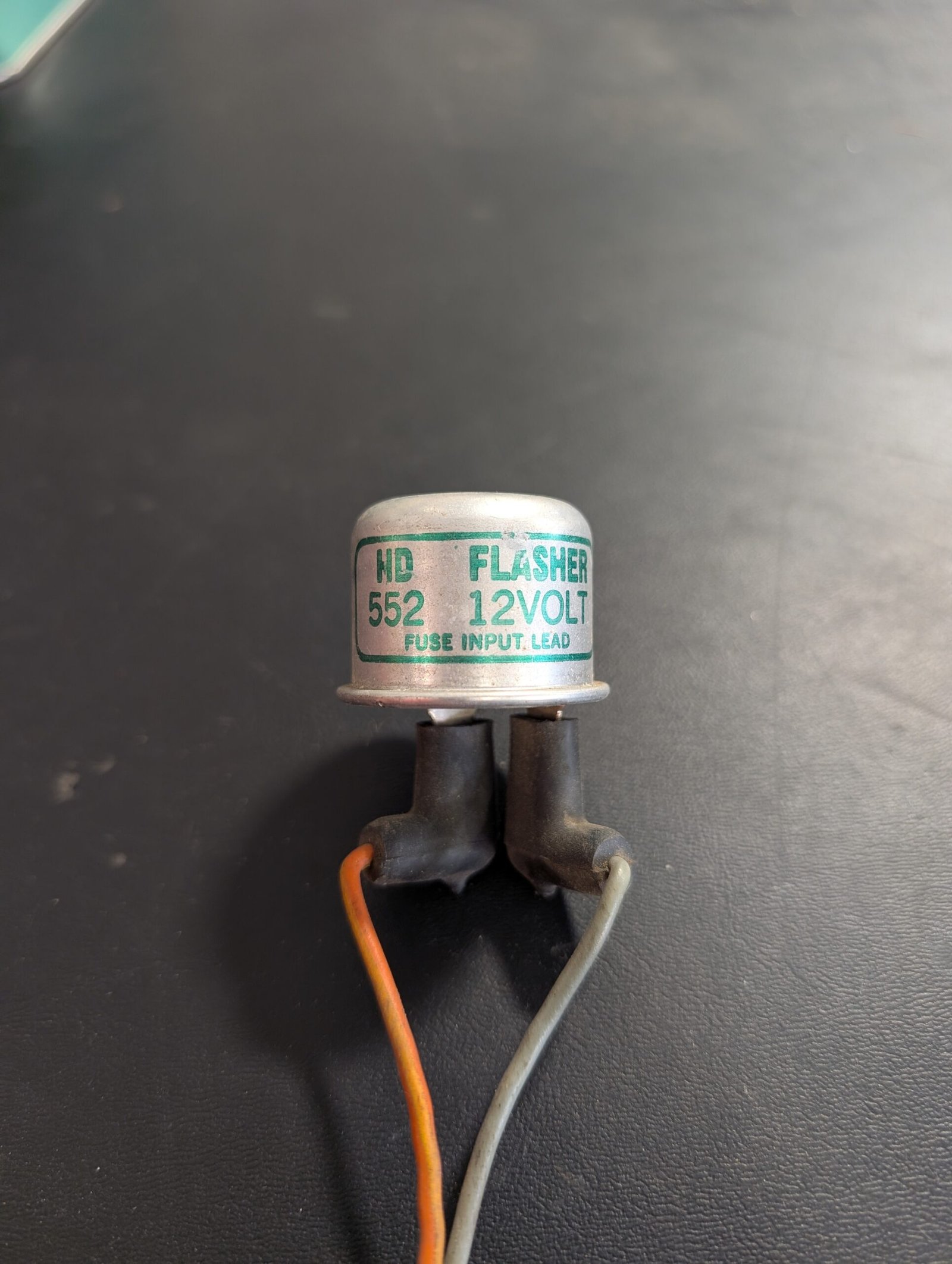
Why It Happens: Thermal Flashers Need a Minimum Load
Inside that classic metal canister is a bimetallic strip. As current flows through it on its way to your bulbs, the strip heats up until it bends and breaks the circuit (lights off). Once it cools, it snaps back and reconnects the circuit (lights on). That heating and cooling cycle is what creates the familiar click-clack rhythm of your blinkers.
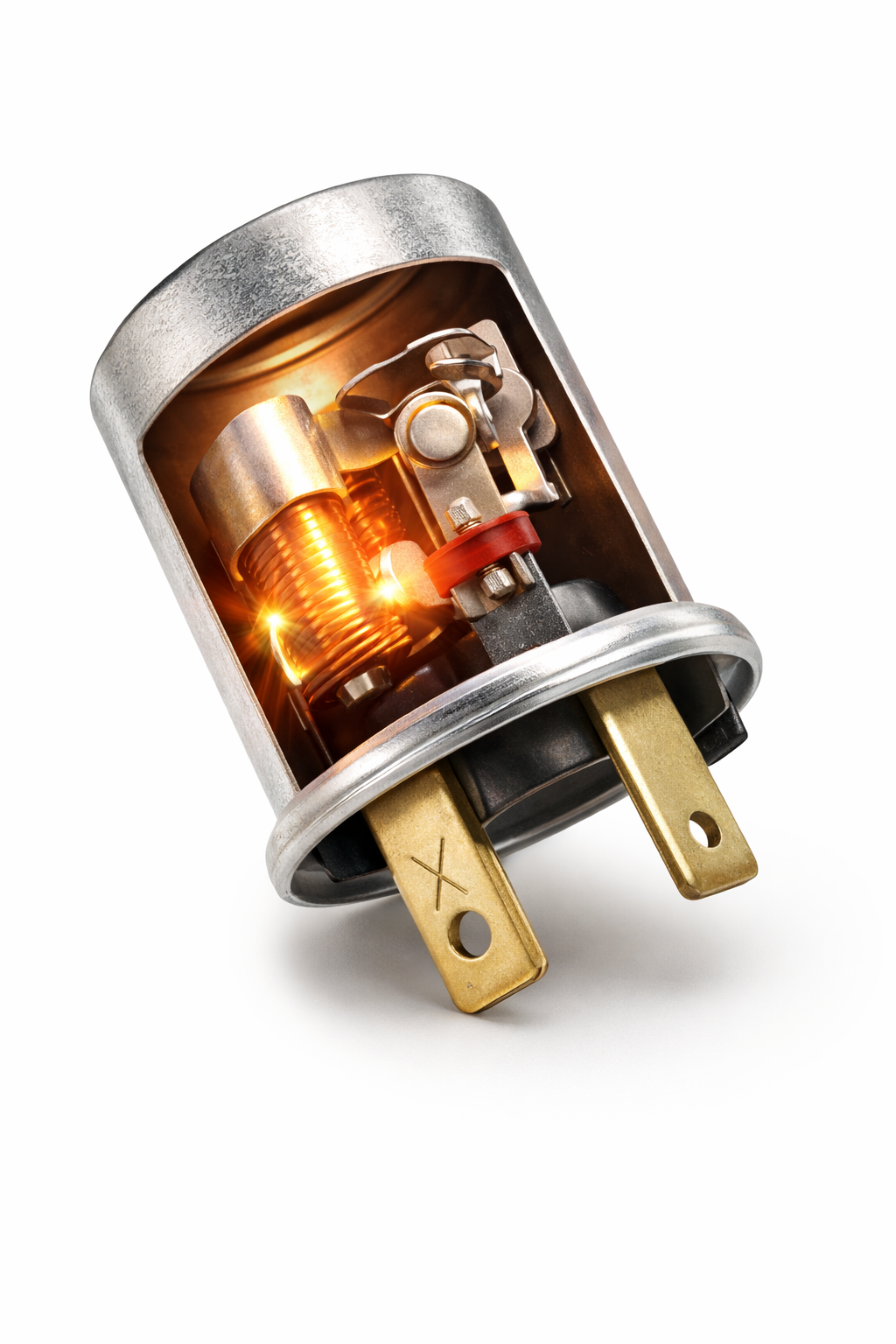
Here’s the catch: that only works if enough current flows through the flasher to heat the strip. Thermal flashers are designed around the load of the factory bulbs on the circuit. Take most of those bulbs away and the flasher never gets hot enough to cycle, so the light just stays on.
The Single-Bulb Test Trap
This is the part that got me. When you’re rewiring a car, it’s natural to test one circuit or one bulb at a time. But a single small bulb, like a dash indicator, doesn’t pull nearly enough current to make a thermal flasher cycle. You’ll get a solid, dim light, and it looks exactly like a bad flasher.
So you buy a new thermal flasher, install it, and get the same result. That’s precisely what happened to me. The flasher wasn’t bad; my test setup just didn’t have enough load on it.
Rule Out Bad Grounds and Connections First
A dim, solid bulb isn’t always the flasher’s fault. A poor ground or a corroded or loose connection adds resistance to the circuit. That reduces the current flowing through it, which makes the bulb dim and can also keep a thermal flasher from cycling. The symptoms look almost identical, which is another reason people end up blaming (and replacing) a perfectly good flasher.
Before you buy parts, check these first:
- Make sure each light housing and bulb socket has a clean, solid ground to the body.
- Clean any corroded sockets, bulb contacts, and connectors.
- Look for loose, pinched, or damaged wires, especially anywhere you’ve recently worked.
- If you’re testing with a thermal flasher, hook up all the turn signal bulbs on that side so the circuit sees its normal load.
Why LED Bulbs Cause the Same Problem
If you’re switching to LED bulbs, you’ll run into the same thing. LEDs draw only a fraction of the current of the original incandescent bulbs, so to a thermal flasher it’s as if the bulbs aren’t there. Depending on the flasher, you’ll get either a rapid “hyper-flash” or no flash at all, with the signal stuck on solid.
The Turn Signal Fix: Swap to an Electronic Flasher
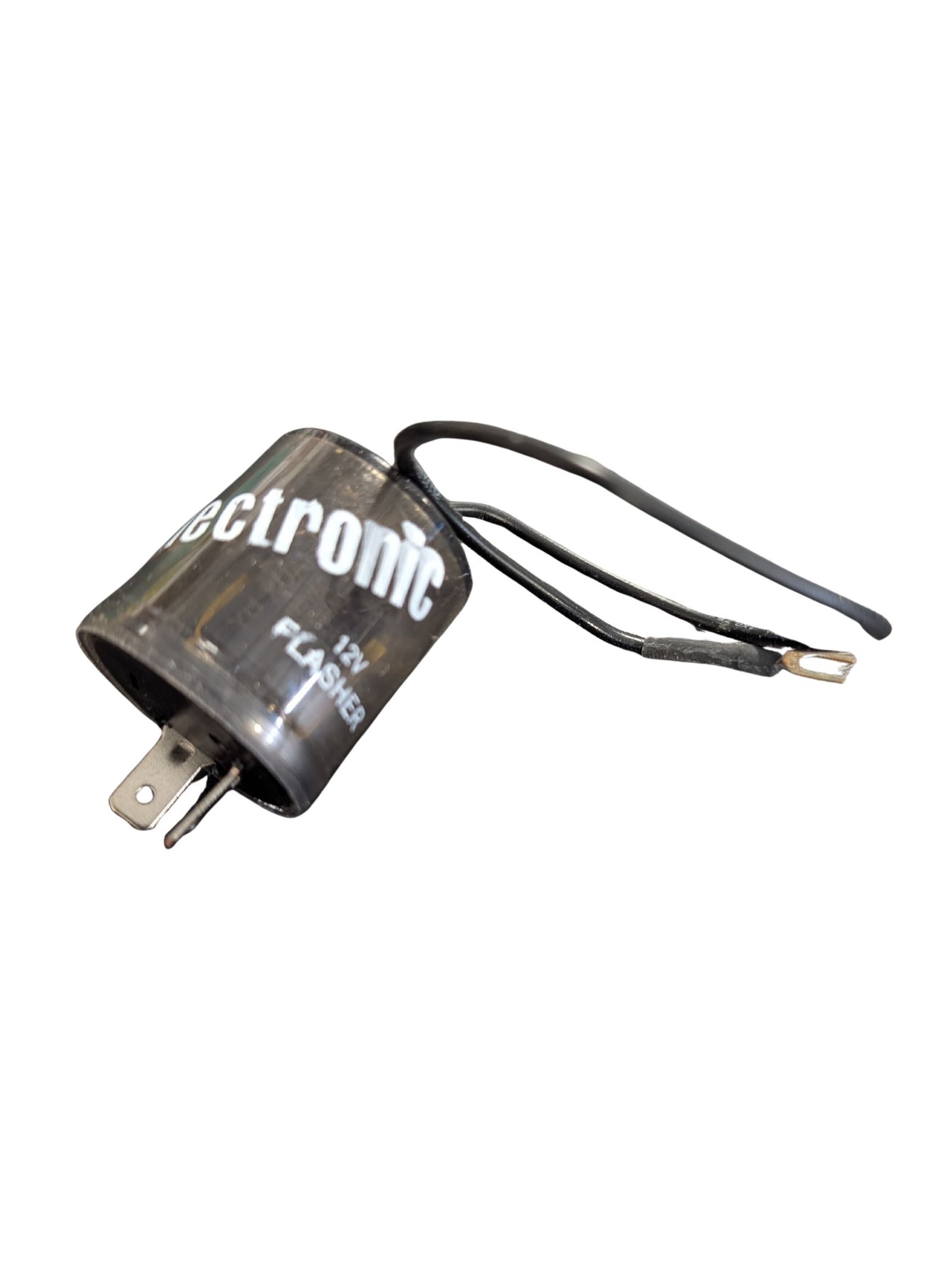
An electronic flasher uses a small timing circuit instead of heat to control the blink, so it doesn’t depend on how much current your bulbs draw. It will flash the same with one bulb, a full set of incandescent bulbs, LEDs, or a mix.
In my test, I swapped in an electronic flasher with only that single dash indicator bulb connected, and it started flashing immediately. Not only that, the bulb was bright and strong instead of dim. Even if you’re not having turn signal trouble or running LEDs, an electronic flasher gives you a stronger, more consistent flash.
It Needs a Ground
This is not quite a plug-and-play swap. Unlike the original two-prong thermal flasher, many electronic flashers, including the one I used, have a ground wire that needs to be connected to a clean chassis ground. For my test I just tied in a temporary ground. For a permanent install, run it to a solid ground point under the dash.
Check the Terminal Labels
An old thermal flasher doesn’t care which way the current flows, but an electronic one does. When you install it, match these terminals to your harness:
- Terminal X (or 49): connects to the power source (battery/ignition)
- Terminal L (or 49a): connects to the load (the turn signal switch and bulbs)
Pro tip: Some vintage vehicles have the power and load wires reversed in the factory plug. If your electronic flasher doesn’t work right away, you may need a polarity-reversing adapter or to swap the pins in the plastic connector housing.
Getting the Click Back
One thing I was worried about: some electronic flashers are completely silent. That audible click is what reminds you that your turn signal is still on, so you don’t drive for miles with it blinking. I specifically picked a flasher that still makes the clicking sound, and it’s the one linked below.
Another Option: Load Resistors
If you’re running LEDs, you can also add load resistors to the turn signal circuit to make the bulbs look like incandescent ones to a thermal flasher. It works, but it means extra wiring, and the resistors get hot and have to be mounted carefully. For a classic car, I think swapping to an electronic flasher is the simpler and cleaner turn signal fix.
Products I Used
- Electronic flasher with audible click (the one from the video; see it in the Garage Store)
- LED replacement for 1157 bulbs
If reaching the factory turn signal lever is another challenge in your classic car, a turn signal extension rod can make the factory switch easier to reach and use.
Affiliate Disclosure
Some of the links on this website are affiliate links. As an Amazon Associate, I earn from qualifying purchases. This means that if you click on a link and make a purchase, I may receive a small commission at no additional cost to you.
I only recommend products that I have used personally or believe will provide value to fellow enthusiasts. Your support helps keep this site running and allows me to continue creating helpful content. Thank you.